
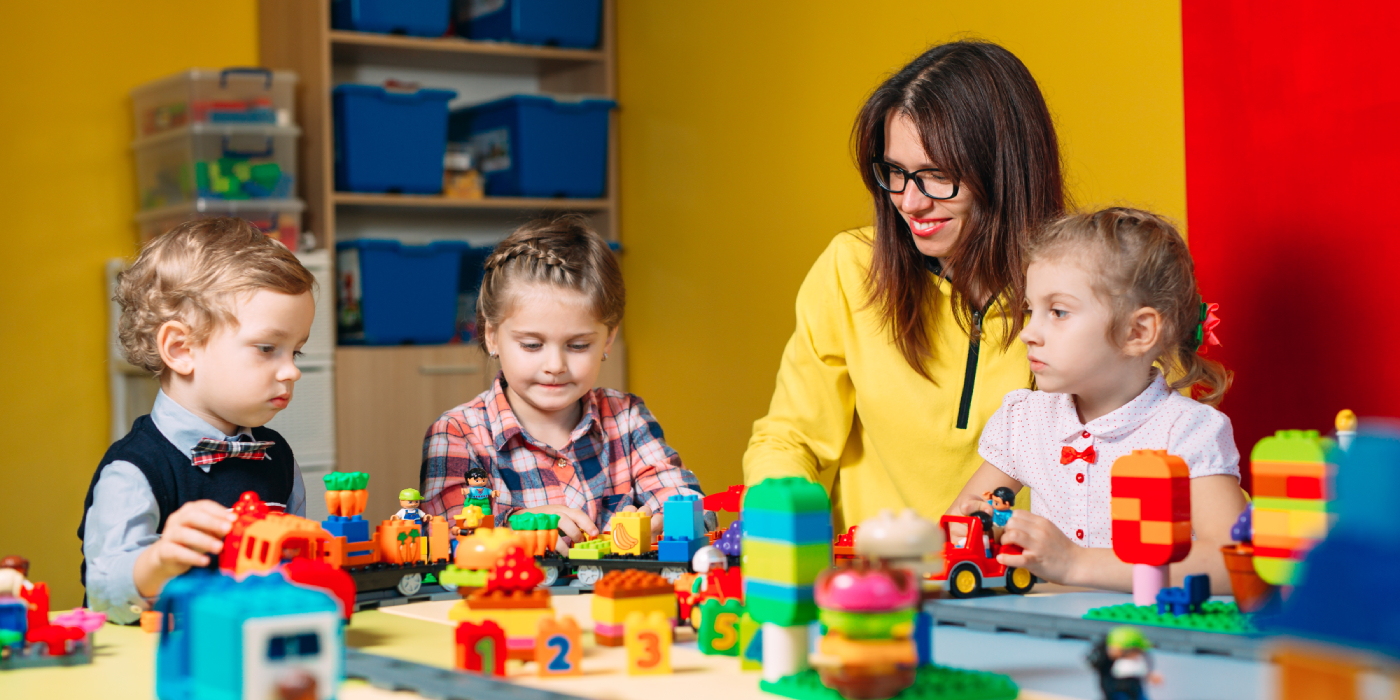
There’s a dynamic approach to education called play-based learning, where the benefits of play-based learning truly shine through purposeful activities. This child-centered approach emphasizes age-appropriate, student-led experiences, fostering cognitive, social, emotional, and physical skills. In contrast to direct instruction, which features teacher-directed lessons, play-based learning empowers children to take the reins. This approach nurtures essential life skills and sets the stage for exploring cognitive benefits more deeply – which will be discussed in detail in our next section.
Cognitive Development and Critical Thinking Through Play
Did you know that play-based learning lays the groundwork for complex decision-making later in life? Cognitive skills get their first workout in a playful environment, supporting problem-solving, pattern recognition, and strategic thinking. Let’s unpack its mechanics:
- Object categorization: Students naturally sort shapes while arranging blocks.
- Experienced consequences: Water play teaches gravity’s impact on liquid flow.
- Mental mapping: Building 3D towers reinforces spatial relationships.
This pedagogy enhances memory retention and concentration like nothing else (research suggests significant improvement). But why stop here? Critical thinking blooms when children confront unscripted challenges in constructive play, for instance:
- Balancing asymmetrical block structures
- Solving puzzle combinations through trial-and-error
- Engineering canals in sandboxes using gravity logic
Through open-ended play, for example, mixing safe household materials, young minds discover how hypotheses become actionable knowledge. Want to see their problem-solving skyrocket? Provide open-ended tools, such as interlocking bricks, and observe them engineering solutions to self-created obstacles.
While cognition flourishes here, stay tuned: we’re just one play session away from exploring social-emotional growth.
Nurturing Social and Emotional Skills Through Play
Educators frequently miss the profound impact play-based learning has on developing young minds’ social awareness and emotional fluency. While building towers and roleplaying scenarios might appear frivolous, this natural process cultivates critical relationship tools through organic peer interaction.
Imagine preschoolers negotiating roles in a pretend restaurant – they instinctively practice persuasive communication while dividing pretend chef/server duties. This isn’t just play; it’s social engineering where children master vital skills like:
- Cooperative problem-solving to resolve “kitchen” arguments
- Empathetic leadership when assigning tasks
- Responsibility sharing through toy exchanges
Such interactions build relational confidence that prevents isolation later – after all, every healthy adult friendship begins with playground diplomacy.
Now consider emotional growth: When toddlers wrestle with stubborn block structures, they experience achievement and defeat in a microcosm. Guided play sessions teach frustration tolerance through scaffolded challenges, letting children breathe through disappointment and celebrate collaborative solutions. These controlled exposures build resilience muscles that protect against emotional storms in adolescence.
But the magic happens in translation. A child comforting a crying playmate after imaginary tea spills mirrors real-world compassion. This emotional rehearsal through symbolic play develops intuitive kindness that no lesson plan could replicate.
Ultimately, play-based environments create laboratories where social instincts meet emotional IQ, forging kids who collaborate authentically and self-advocate respectfully. These competencies form humanity’s bedrock – skills no app nor worksheet can substitute.
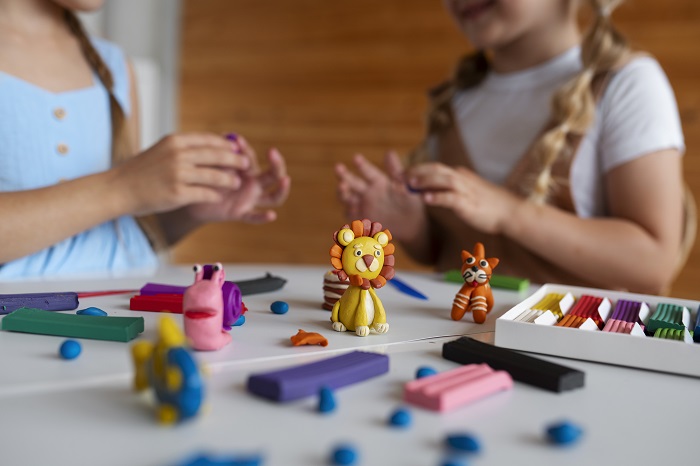
Enhancing 21st-Century Skills with Play-Based Activities.
Play-based learning has been gaining traction among early childhood educators, and the benefits of play-based learning reach far beyond classroom walls. Studies indicate play-centric environments foster essential life abilities while strengthening cognitive functions. According to the American Academy of Pediatrics, this approach develops creativity, collaboration, and problem-solving capacities – skills critical for future workforce adaptability.
Children engage differently here. Instead of static instruction, they experiment with textures during water tables or negotiate roles in pretend bakeries. These experiences naturally cultivate 21st-century skills like communication, social awareness, and innovative thinking. One review found play-focused preschoolers outscore peers in creative solutions by 42% during standardized assessments.
The magic lies in movement integration. Building block towers enhances spatial reasoning while coordinating group play improves conflict-resolution abilities. Physically, students develop coordination through dancing to nursery rhymes and strengthen hand muscles shaping playdough letters – vital precursors for handwriting readiness.
Read More : Land Your Dream Job With These Skills, Techniques and Examples
Integrating Play-Based Learning in Educational Settings
Implementing play-based learning effectively hinges on balancing open-ended investigation with measurable academic outcomes. Quite often, educators must weigh curriculum alignment against organic discovery while nurturing children’s holistic development. What is the key to success? A three-fold focus:
- Structuring environments that encourage safe risk-taking through tactile materials
- Intertwining implicit concept exploration with explicit skill demonstration
- Adapting lesson pacing based on real-time observational assessments
How do educators execute this balance? Through intentional classroom design fostering collaboration – they craft spaces where children negotiate roles during imaginative play while naturally absorbing curriculum fundamentals. This approach meets mandated standards without extinguishing curiosity, proving playful and academic aims aren’t adversaries but partners.
Ultimately, skilled educators act as learning choreographers – offering provocations through open-ended tools like loose parts or sensory tables, then allowing child-led narratives to drive knowledge integration. The result? Developmentally appropriate growth where mathematical reasoning emerges through block tower engineering and storytelling blossoms at make-believe market stalls.
Future of Education and Play
Play isn’t just fun – you need to prioritize it as childhood’s fundamental development tool where essential skills blossom. Through self-directed exploration, children actively engage with their environment to make profound connections between concepts. We’ve demonstrated how this method cultivates holistic development; play-based learning systematically strengthens social-emotional growth, cognitive abilities, and physical coordination.
Why does this matter more today? Our world demands adaptive thinkers and collaborative problem-solvers – play-based education directly nurtures these future readiness capabilities through experimental engagement. By blending creative discovery with practical skill-building, we plant seeds for curiosity-powered lifelong learning.